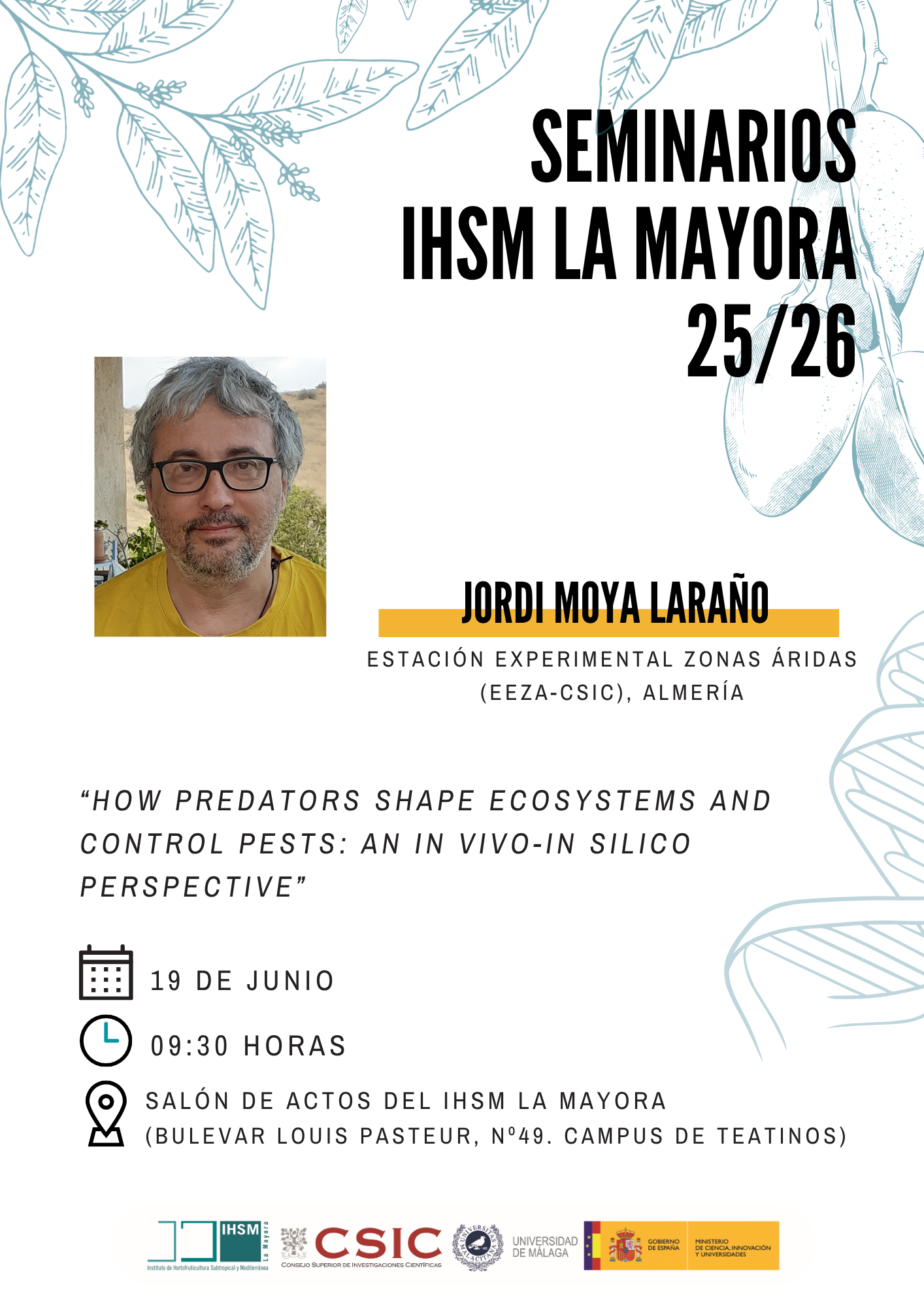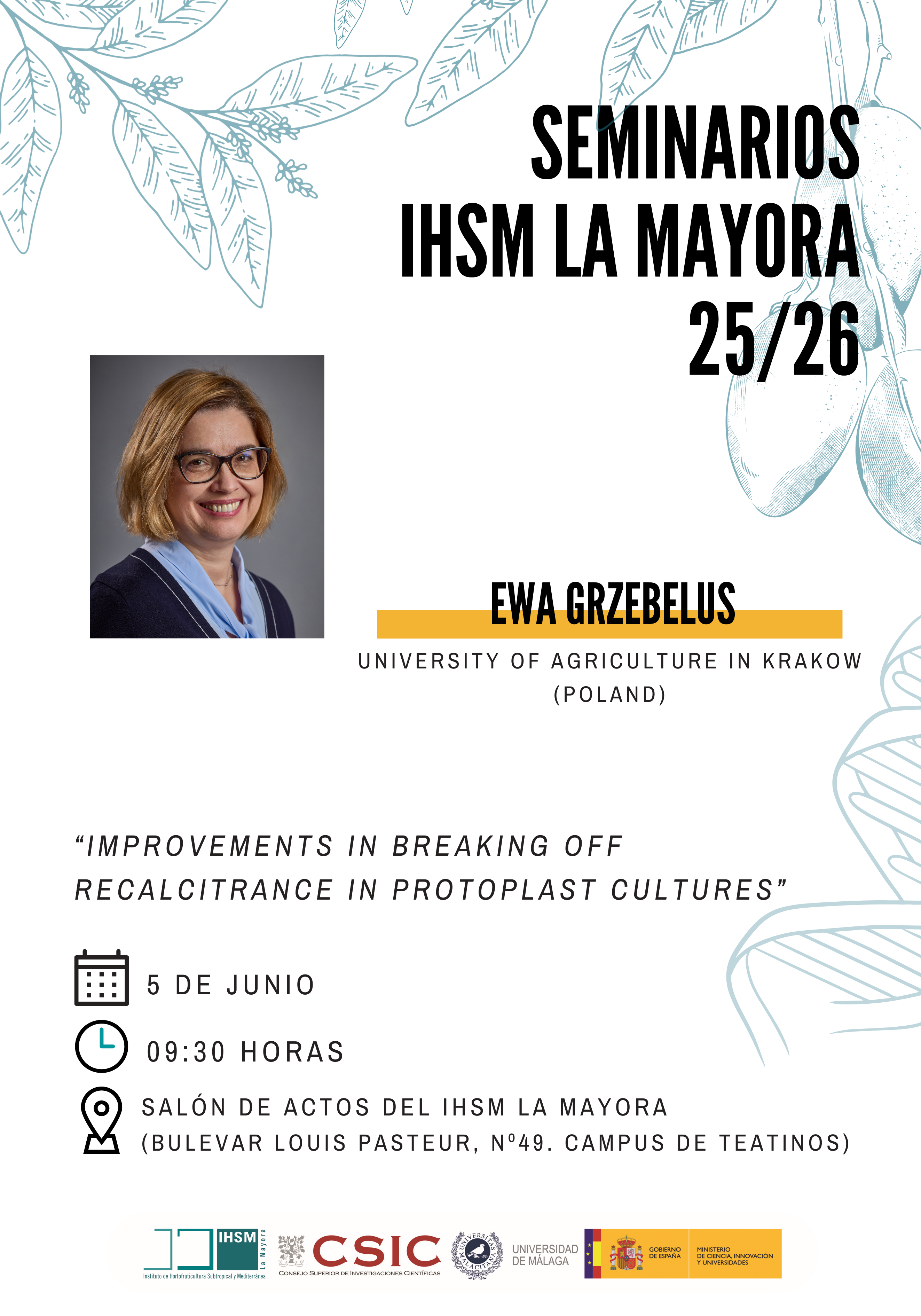
Seminarios IHSM La Mayora - Ewa Grzebelus (University of Agriculture in Krakow (Poland))
Protoplast cultures are one of the most complex and demanding plant in vitro culture techniques used in research and for application purposes. They are particularly important for expanding genetic variability and biological progress in creating initial materials for breeding new crop varieties. Among other things, they are used for in vitro selection, somatic hybridization or now in genome editing by the CRISPR/Cas system. The implementation of techniques based on protoplast cultures into breeding allows both to obtain plants with new combinations of traits, impossible or difficult to obtain by conventional methods, and to reduce the time of obtaining initial materials for breeding. Protoplasts, deprived of the natural protective barrier that is the cell wall, are extremely sensitive to a variety of stress factors that are part of the culture itself (medium, temperature, light conditions), which often leads to cell death or inhibition of mitotic divisions. For this reason, obtaining and running protoplast cultures is very difficult and inefficient in a number of species, making it difficult or even impossible to use in both basic research and plant breeding. The prerequisite for conducting protoplast cultures is to obtain them from biological material in large numbers and in good physiological condition. A critical moment of any protoplast culture is the reconstitution of the cell wall and induction of the first mitotic divisions. Despite innovations introduced over several decades, the protoplasts of many species already show division latency at this stage of culture. Therefore, factors that support the proper development of protoplasts at early stages of culture in selected crop species will be presented.