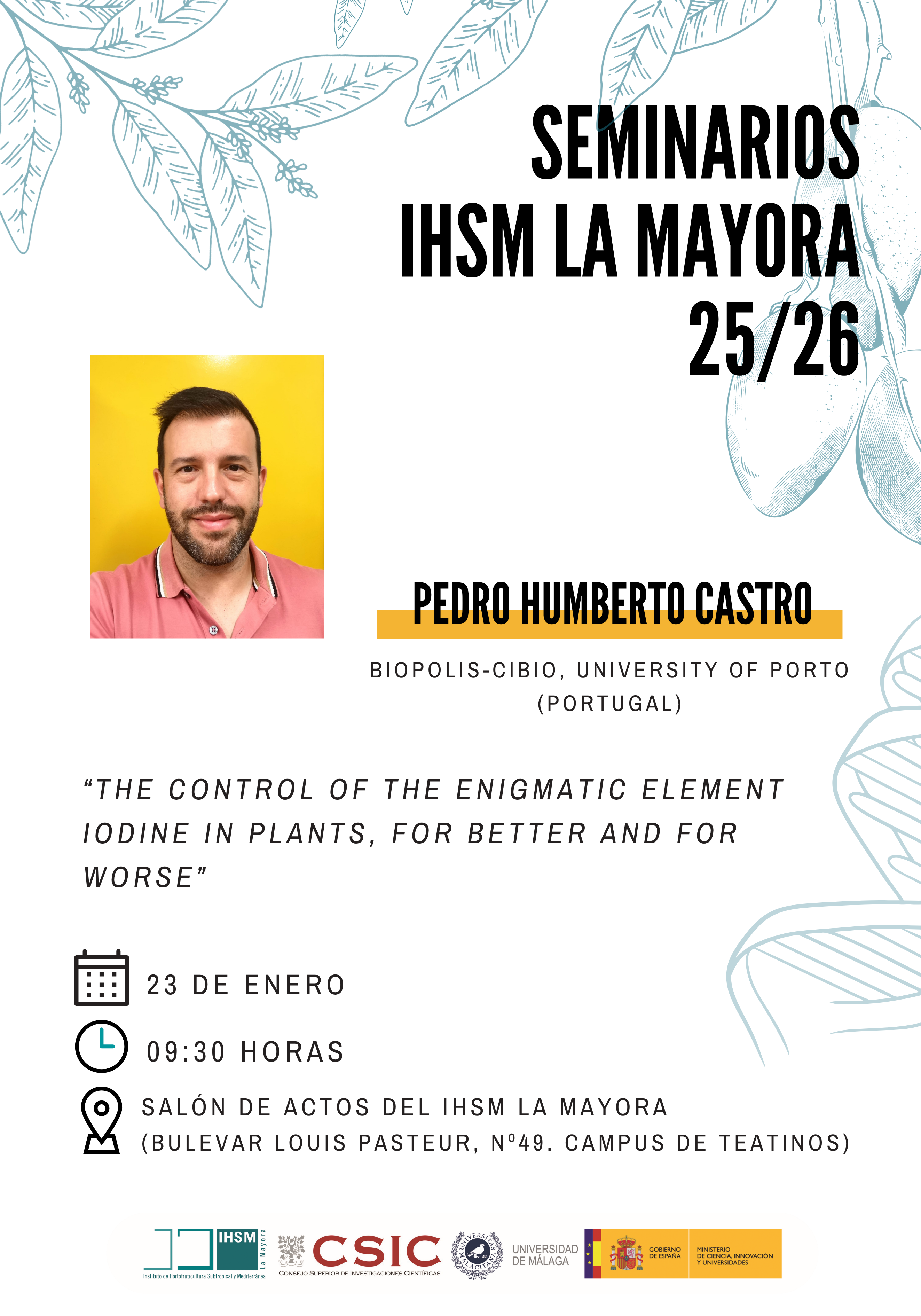
Seminarios IHSM La Mayora - Pedro Humberto Castro (Biopolis-Cibio, University of Porto - Portugal)
Iodine is widely recognized for its essential role as a nutrient in human health. However, the vast majority of iodine roles in diverse biological systems remain largely unexplored. In plants, iodine is considered a beneficial element that, in proper doses, can boost plant production and tolerance to environmental stress conditions. In contrast, excessive doses of iodine, resulting from anthropogenic actions or in specific coastal ecosystems, can have detrimental effects on plants, known as reclamation Akagare disease. Therefore, iodine levels should be tightly balanced inside the plant. From a more applied perspective, iodine in plants is important as a food source. Plants are the primary source of iodine for cattle and can be directly/indirectly incorporated into the human diet. As such, different agronomic approaches have been developed to increase the iodine biofortification levels of strategic crops. In parallel with agronomic practices, gene-based approaches targeting genes involved in nutrient acquisition have achieved more robust results; however, the regulation of iodine in plants remains largely unknown. In line with this, my research team has initiated a comprehensive characterization of the gene regulatory network of iodine in plants by implementing state-of-the-art transcriptomics and comparative genomics to determine conserved gene networks that modulate this element content. For a funcconal genomics analysis, Arabidopsis T-DNA insercon mutants, overexpression, and complementacon lines were established and subjected to varying concentracons of iodide salts. The impact of these treatments was studied through the analysis of morphological and physiological parameters, and the iodine content of the different lines was quancfied. The iodine-associated genes were studied in an evoluconary context, namely in crops, to establish conserved marker genes for iodine response and for marker-assisted selection. The current study will be seminal to paving a new understanding of how plants perceive iodine and how this knowledge can be explored toward iodine tolerance and bioforcficacon in crops.